
14mm vs 16mm pickleball paddles: what the 2 mm changes
The old advice is easy to remember: 14 mm for power, 16 mm for control. It still lines up with some traditional builds, but it is a poor buying shortcut across modern paddles.
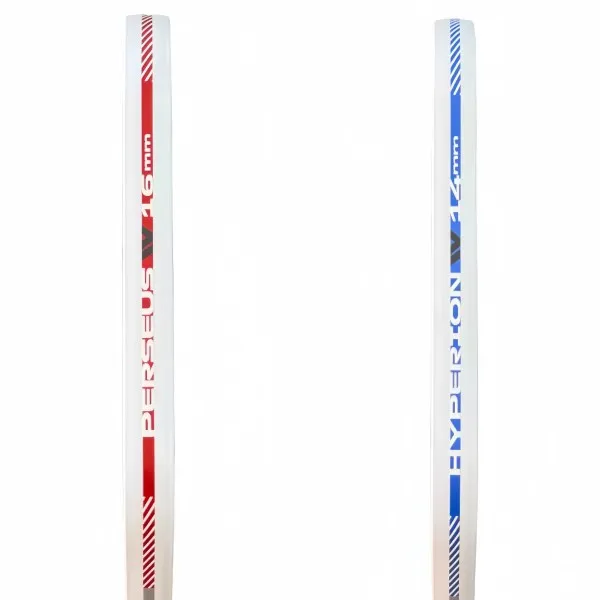
Maybe you have heard that 14 mm means more power and 16 mm means more control, then tried both and found the 14 mm poppier at the kitchen while the 16 mm drove the ball just as hard—or harder. That can happen. Pop on a compact swing and power on a full swing are not the same thing.
So instead of asking which thickness is better, ask what you actually want to change on court—and whether thickness is really the reason the two versions feel different.
First, make sure you are comparing the same thing
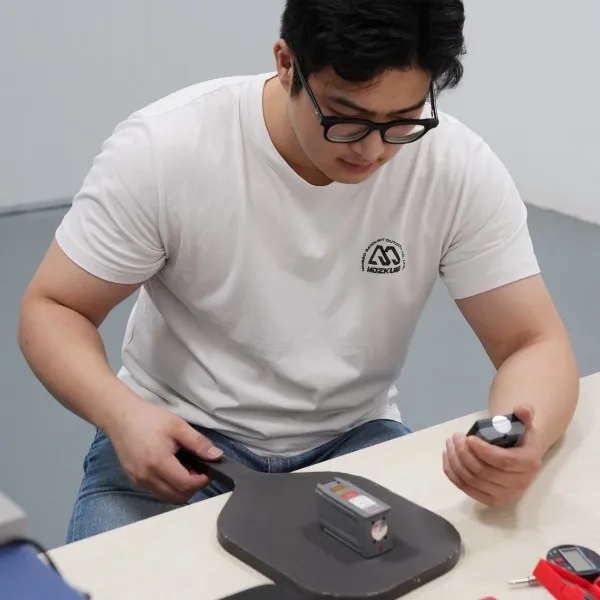
On Mozkuib hot-pressed projects, 14 mm or 16 mm is the nominal paddle-body thickness measured through the hitting area, away from the edge guard. It is one build field, not a performance grade.
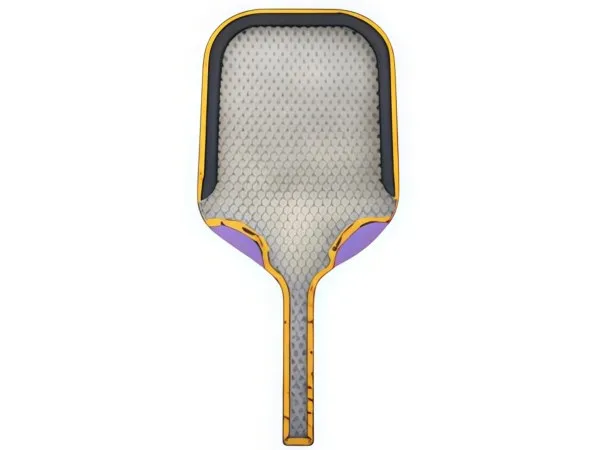
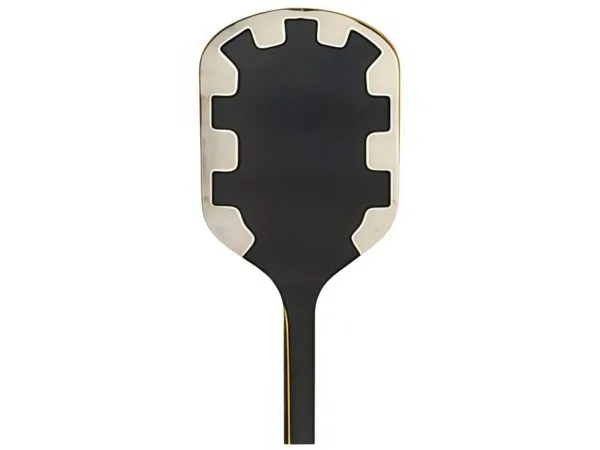
That matters because two paddles can both say “16 mm” and still use different core architecture, face layup, perimeter construction and mass distribution. The number matches; the build does not.
Change the 2 mm, not the whole paddle
The cleanest comparison keeps the rest of the build as close as possible. If several things change together, the result may be real—but it is no longer a thickness-only result.
Why the old 14 mm / 16 mm rule gets messy now
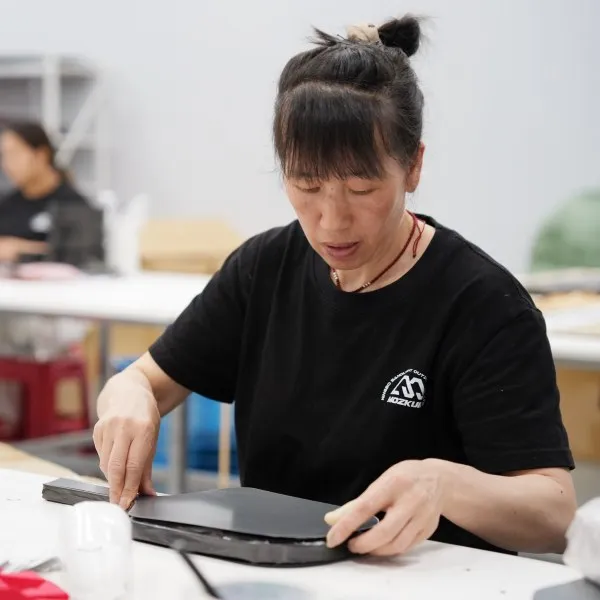
Modern paddles can use the same thickness label on very different internal architectures. That is why pop, full-swing power, hand speed and stability do not line up neatly with 14 mm and 16 mm anymore.
Independent matched-pair testing published in 2026 includes 16 mm versions that produce more full-swing firepower with only a modest swing-weight increase, alongside other pairs where the thinner version still has an advantage. The rule has not flipped; it has simply become less reliable.
A common player report still survives the newer designs: in a matched pair, the 14 mm version can feel more immediate or “poppy” on compact swings. Just do not turn that one sensation into a prediction about every other shot.

So which one should you choose?
If the same paddle comes in 14 mm and 16 mm, start with the part of your game that actually bothers you. Then look at the measurement or shot that answers that question most directly.
“The paddle feels late in fast exchanges.”
Look at swing weight if it is published by a comparable test source, then hit counters and quick reloads back to back.
A 14 mm version can feel more immediate, but a low-swing-weight 16 mm can still be the quicker paddle in your hand.
“Mishits twist the face more than I want.”
Look at twist weight and shape when comparable data are available, not thickness by itself.
A 16 mm version may be more stable in a matched pair, but the label does not guarantee it.
“I want more pace on serves and drives.”
Look for exact-model power data or hit both versions on a full swing.
Do not choose 14 mm simply because it is thinner. Some modern 16 mm versions match or exceed their 14 mm counterpart on full-swing power.
“I mostly notice that one feels softer or more direct.”
That is a valid reason to choose.
Feel does not need to be turned into a universal engineering rule. If you prefer one response and can repeat that preference, that may be enough.
If both versions feel basically the same to you, that is useful information too. Thickness does not have to make the decision just because it is printed on the spec sheet.
A simple back-to-back demo is enough
You do not need to turn this into a lab test. You just need to give both paddles the same chance.
USA Pickleball currently has no general paddle-thickness or paddle-weight restriction, but sanctioned play still depends on the exact approved model. UPA-A also lists thickness by certified model for professional play.
USA Pickleball Approved Paddle List →
UPA-A Certified Paddles →
Sources and production basis
Rules, approved lists and model data change. Use the current source for event or certification decisions.
- USA Pickleball, Equipment Standards Manual — paddle size, thickness, weight and approved-model rules.
- UPA-A Paddle Rules and UPA-A Certified Paddles List — professional paddle rules and thickness by certified model.
- Pickleball Effect, 14mm vs 16mm Pickleball Paddles in 2026 — independent matched-pair examples showing that modern thickness variants do not follow one universal power / control rule.
- Pickleball.com, Swing Weight and Twist Weight by Paddle Shape — current explanation of the two measurements and why static weight alone is incomplete.
- Mozkuib production basis — standard hot-pressed 14 / 16 mm projects, matched-sample planning, face / core options and production inspection.
Comparing 14 mm and 16 mm for a new paddle line?
Keep the shape, face, core architecture and target weight as close as possible, then let the two samples earn different roles before you launch both.


