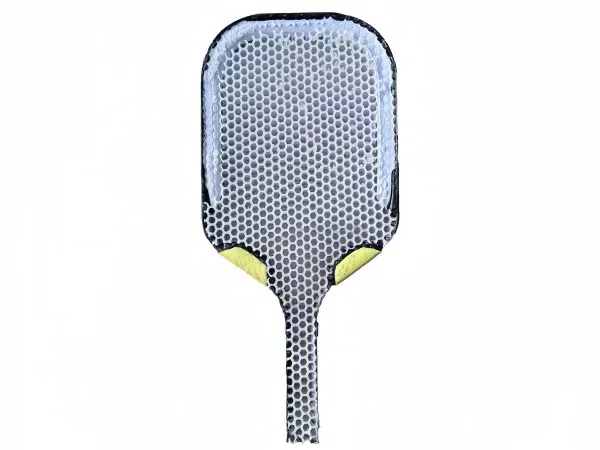
Honeycomb centerPP honeycomb carries the main hitting area.

A paddle sold as “foam core” may still use a polypropylene honeycomb center, or it may replace the center with EPP or MPP foam. The quickest way to compare them is to check the center core first, then see where any second foam is used.
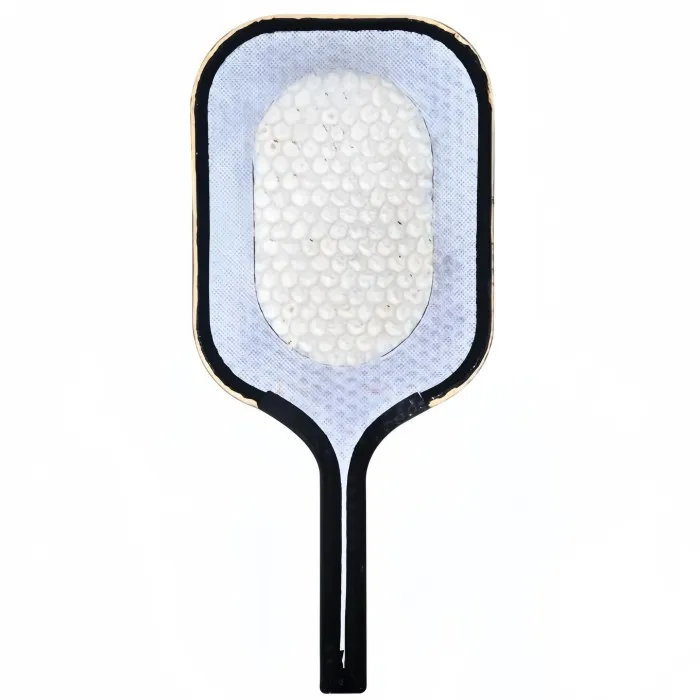
In a conventional build, polypropylene honeycomb fills most of the hitting area. Some newer paddles keep that honeycomb and add foam at the edge or throat. Full-foam designs replace the main center with EPP, MPP or another foam system.
Once you know the center core and foam placement, the generation label matters much less. The face, thickness, shape, finished weight and surrounding reinforcement can still change how the paddle plays.
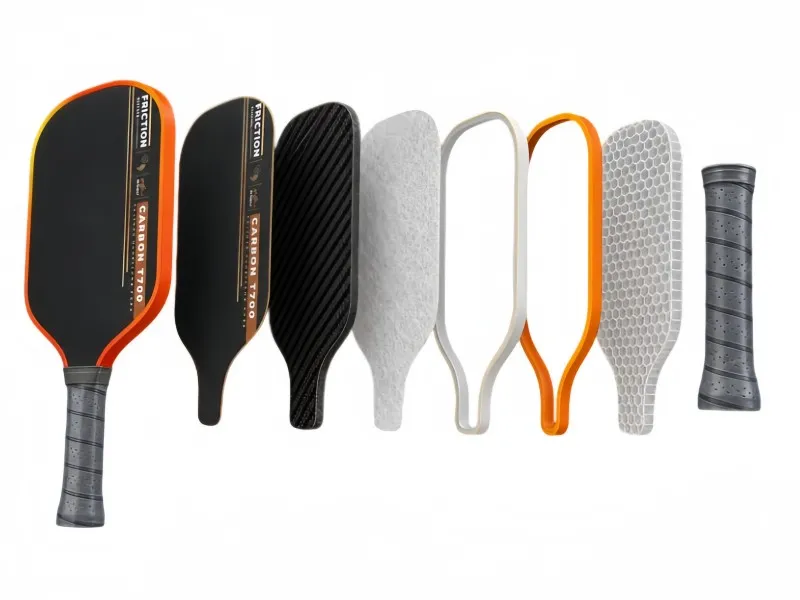
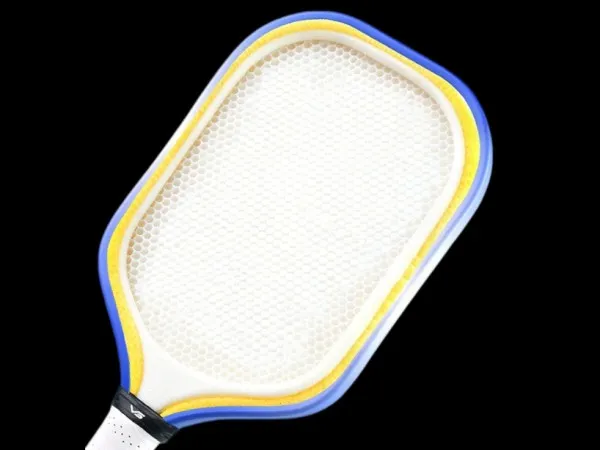
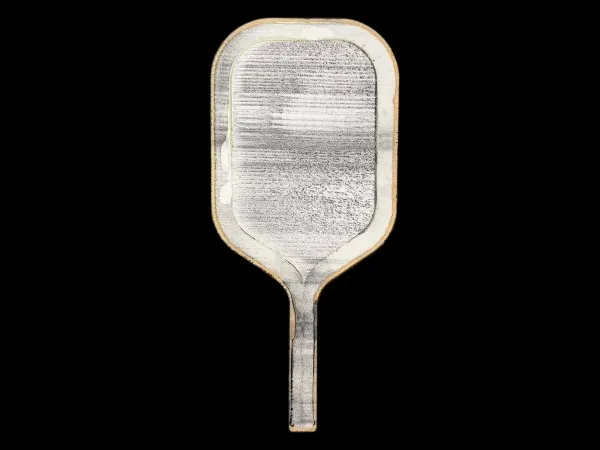
If a spec sheet says only “EPP core” or “MPP core,” you still do not know the foam density, where the foam sits, the face layup or the finished weight.
PP honeycomb is still a common starting point in the paddles we make. When honeycomb is specified, 8 mm and 10 mm cell sizes are common project references.
EPP stands for Expanded Polypropylene. USA Pickleball’s current approved list includes EPP-core paddles as well as mixed builds such as EPP + EVA, so “EPP” can describe one part of a more complex core.
USA Pickleball currently lists some paddles as “Microcellular Polypropylene (MPP) foam.” But suppliers do not use MPP consistently. For a custom build, we confirm the supplier’s material sheet before putting an MPP description on the sample specification.
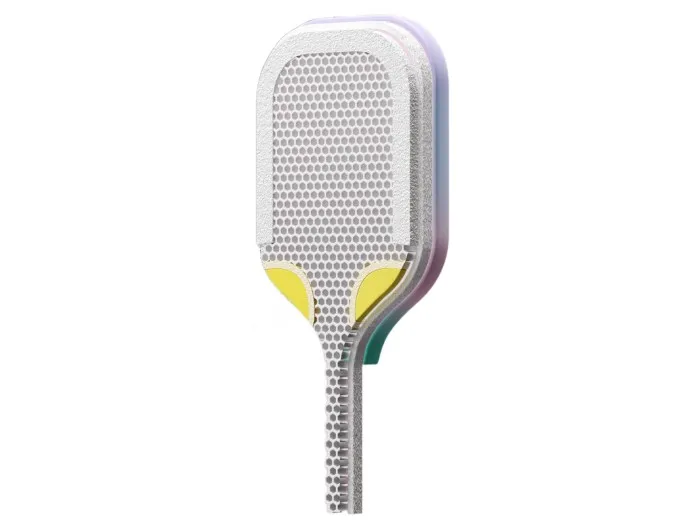
Secondary foams can sit around the perimeter, in the throat, or in a support channel. A label such as “EPP + EVA” does not tell you which material is doing which job unless the build is documented.
USA Pickleball’s current approved list already includes examples labeled EPP + EVA and TPU + EPP. In a sample brief, we record the center, perimeter and throat or channel separately so the same core layout can be repeated.
Friday Pickleball, a paddle brand, currently markets its full-foam Aura as Gen 4. LixiSports, a paddle manufacturer, uses Gen 4 for a honeycomb center with perimeter and throat foam, and Gen 5 for an EPP center.
That is why we do not build from the generation number alone. For a sample, we record the center core, any perimeter or throat foam, the supplier material, density, body thickness, face layup and target weight.
Some long-time honeycomb users describe full-foam paddles as more muted at contact. Some prefer the quieter response; others miss the sharper feedback of honeycomb.
Some players try foam after dealing with crushed honeycomb or dead spots. Full foam removes honeycomb cell collapse from the equation, but bonding and surface wear can still become separate failure points.
Players do not describe EPP and MPP in one consistent way. In finished paddles, the face, shape, mass and foam layout often change at the same time, so the core acronym alone is a weak explanation for feel.
If you switch back and forth and cannot repeat a difference, you do not need to choose a core from the label alone. For a broader paddle test, use the same back-to-back routine each time rather than comparing two unrelated models; our paddle selection guide covers that method.
Send the core reference or cutaway, plus the thickness, target weight and destination market. We can confirm the center material and each added-foam zone before the sample is built.


