
Carbon fiber
A carbon label does not specify the fiber product, tow size, weave, resin or supporting layers.

Pickleball paddle materials make more sense when each label is tied to the part it actually describes. A modern composite paddle can combine face reinforcement, supporting laminate, a core and a finished surface in the same build.
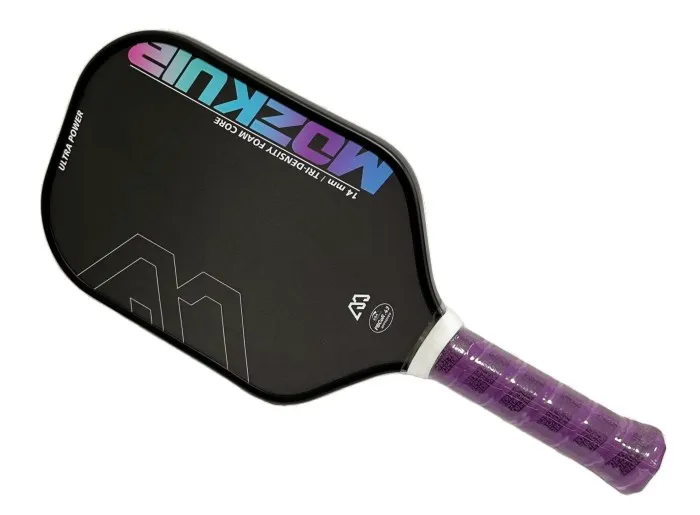
This map focuses on the hitting body of a modern composite paddle. Edge guards, handles and grips are separate components; wood paddles use a different construction.
The visible face is a composite layer, not just a dry fabric swatch. Carbon, glass or aramid reinforcement is carried in a resin matrix, and additional reinforcement can sit below the outer layer.
The core is another material system. Printing, coating and texture belong to the finished surface on the completed paddle.
Carbon fiber, fiberglass and aramid describe reinforcement families. Graphite also appears on paddle labels, but the word alone does not identify the complete face construction.
A carbon label does not specify the fiber product, tow size, weave, resin or supporting layers.
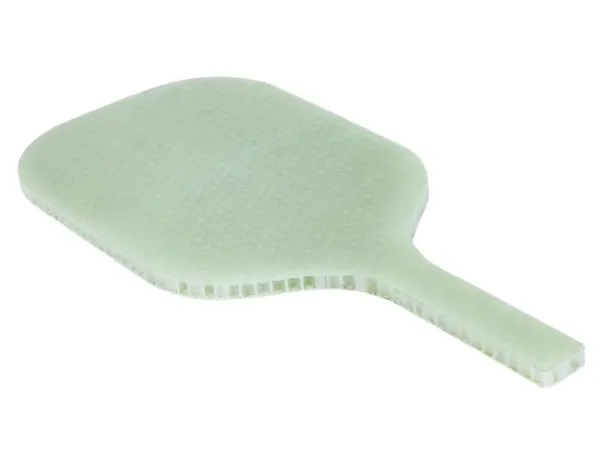
Glass-fiber reinforcement can be the outer face or a supporting layer. Where it sits in the stack matters.
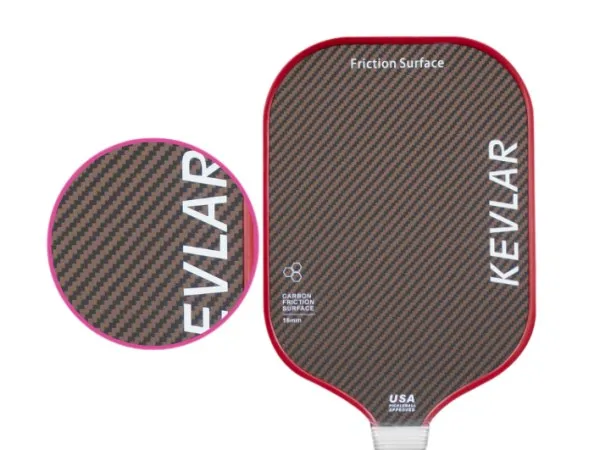
Aramid is the fiber family. Kevlar® is a trademarked aramid-fiber brand now in Arclin’s aramids portfolio, so use that name only when the material documentation confirms it.
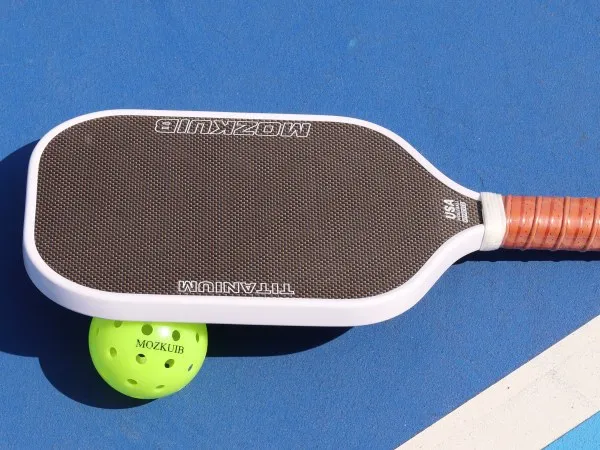
Color, visible weave scale, gloss and texture. A photo alone cannot prove fiber grade, brand, resin system, finished-paddle friction or durability.
Treat them as separate fields: fiber product, tow size and weave pattern.
T300 or T700S identifies a specific carbon-fiber product when the supplier is actually using that material.
“K” refers to thousands of filaments in a tow. It is a bundle-size descriptor, not a finished-paddle quality score.
Plain, twill and other textile constructions are a separate field. K-count does not define the weave by itself.
For Mozkuib production options, see carbon fiber face and layup options.
A T700 face can sit over different cores, and the same PP core can sit under different faces. Core choice is a separate specification.
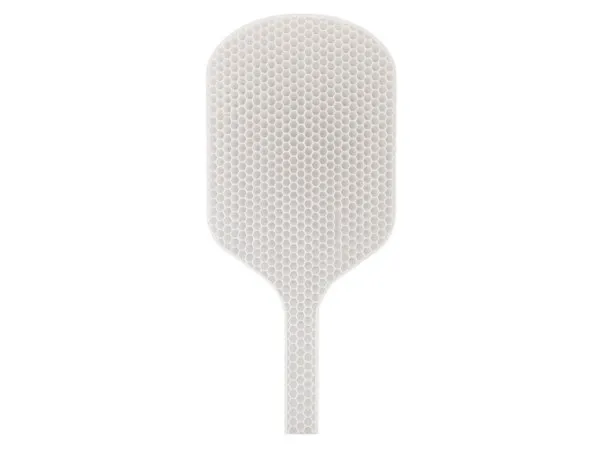
PP honeycomb is the most common starting point in Mozkuib paddle projects. EPP and MPP are shown here as other core examples; EVA, TPU and TFP systems can also be reviewed against the build.
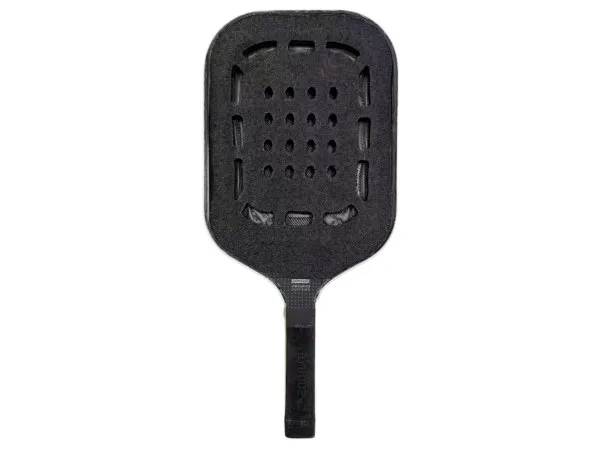
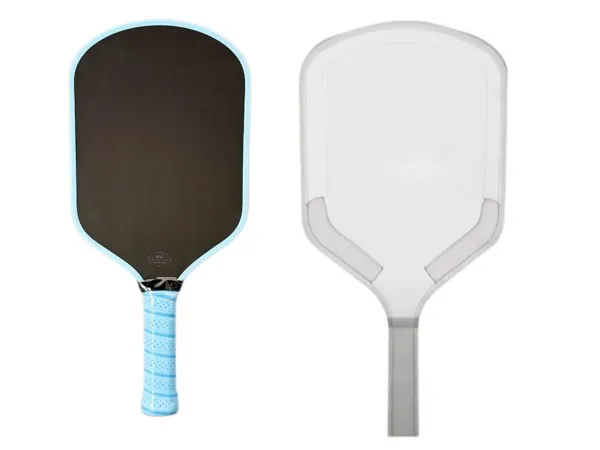
Molding, printing, coating and added texture can change what the ball actually contacts. Compare finished samples, not dry fabric alone.
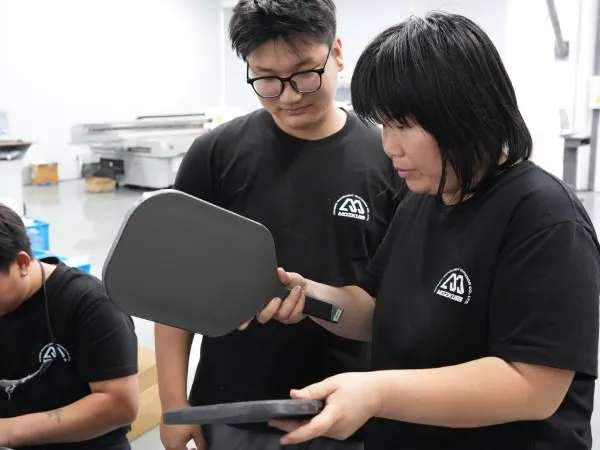
The visible fiber pattern and resin finish before an added particle treatment.
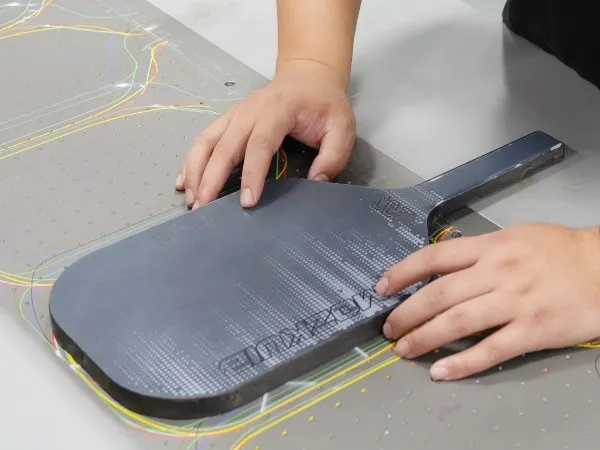
Printing, coating or texture added during the finished-paddle build.
Silicon-carbide, mineral-particle or glass-bead options can be reviewed when the project calls for them.
When several labels appear together, assign each one to its field before comparing two paddles.
Read them as one specification, not seven alternatives.
Fiber datasheets describe fiber properties; they do not predict a finished paddle by themselves.
Send the face reference, core target, thickness and market. Mozkuib can identify which fields are still missing before sampling.


