
How to Choose a Pickleball Paddle: Start With What You Feel on Court
Specs make more sense after you know what you want to change. A paddle that feels slow in fast exchanges, twists on mishits, crowds a two-handed backhand or feels too lively needs a different comparison. Start with the problem, then look at the few measurements that can actually explain it.

Start with what you actually notice on court
Most players do not leave a game thinking, “I need a different core thickness.” They notice that the paddle feels slow, twists on a mishit, crowds a two-handed backhand or reacts more sharply than they want. Start there.
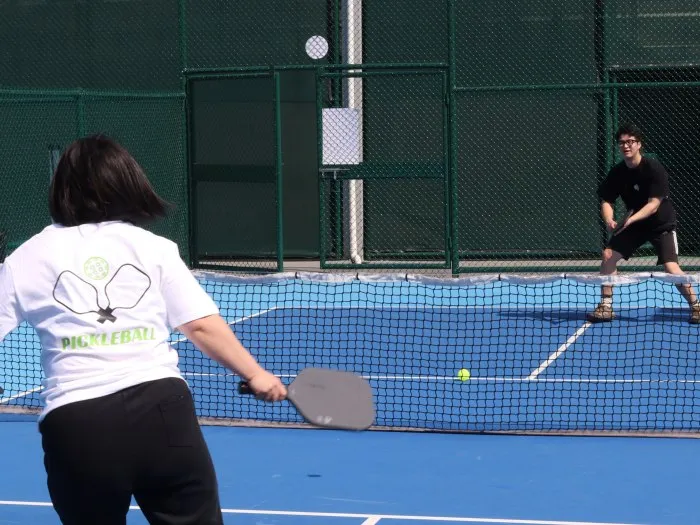
Fast exchanges feel slow.
The face twists on off-centre contact.
You want more reach or room for a two-handed backhand.
The paddle feels too lively, too stiff or too muted.
Weight on the scale is not the same as weight in motion
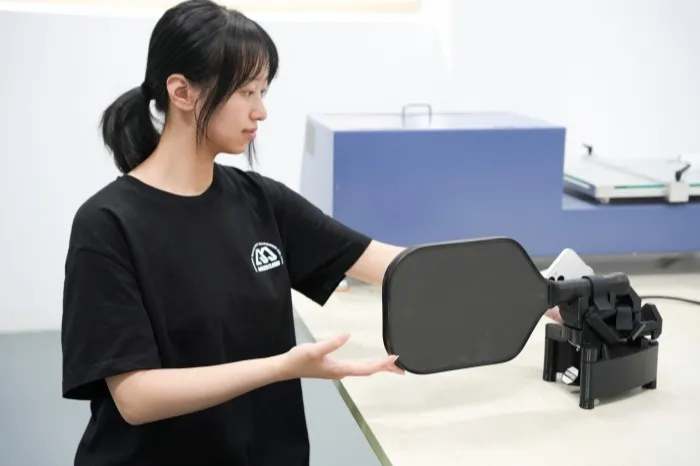
Static weight tells you what the paddle weighs. Swing weight describes how much rotational inertia you feel when you accelerate it around your hand. Twist weight describes how strongly the face resists twisting on off-centre contact. They answer different questions.
When you compare published swing- or twist-weight numbers, use one testing source or one measurement method where possible. A number is only useful if the setup behind it is comparable.
Shape names are useful shorthand. The dimensions tell you more.
“Elongated,” “widebody” and “standard” are convenient labels. For comparison, record overall length, face width and handle length. Two paddles with the same nickname can divide those dimensions differently.
Wider face · shorter handle
Narrower face · longer handle
Illustrative proportions — compare the listed dimensions for the actual model.
USA Pickleball currently limits combined paddle length + width to 24 in (60.96 cm) and maximum length to 17 in (43.18 cm). Those limits define the legal envelope; they do not tell you which shape will suit you best.
If your second hand feels cramped, measure the handle.
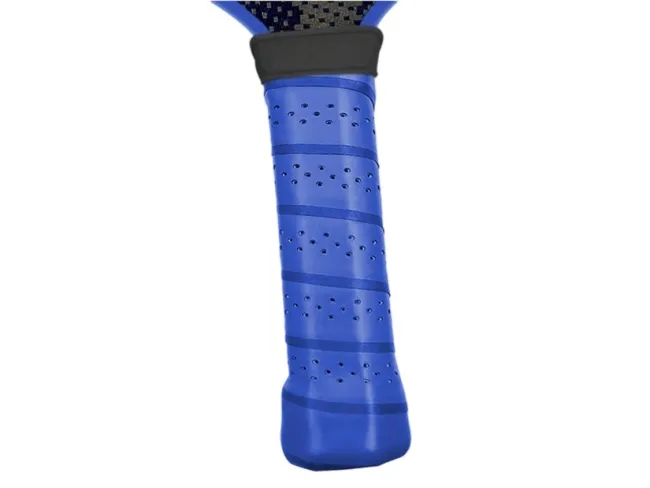
Handle length and grip circumference solve different problems. For a two-handed backhand, the usable handle length matters. Circumference is the finished thickness around the grip. If you add an overgrip, measure the circumference after the setup you actually plan to use.
If the feel changes, find what actually changed.
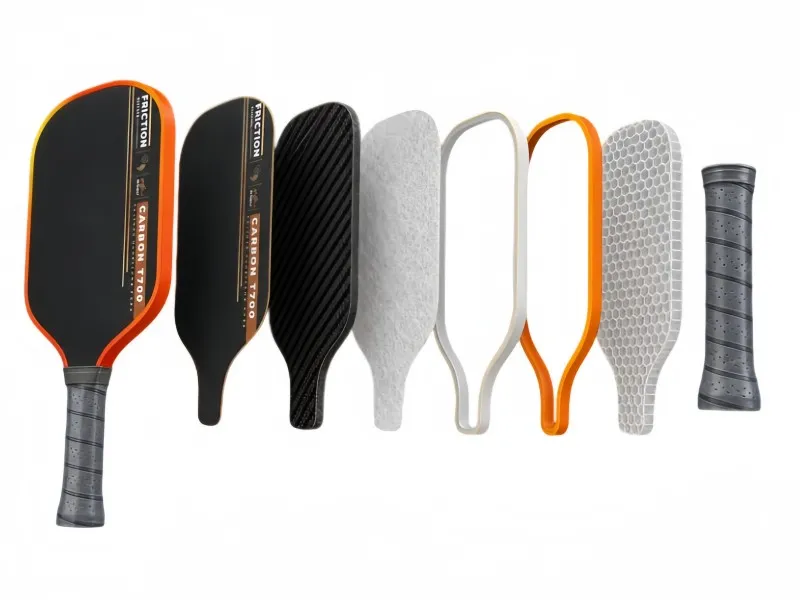
Two paddles can differ in thickness, core, face or layup, surface and manufacturing route at the same time. If the result feels different, do not assign the change to the loudest label on the product page.
Demo paddles the same way—not by first impression.
A useful demo does not need a lab. It needs consistency. If one paddle gets five perfect warm-up balls and the other gets ten rushed contacts, your notes will say more about the test than the paddle.
Before you hit
- Write down the one problem you are trying to solve.
- Record static weight and any comparable swing- or twist-weight data you have.
- Record overall length, face width, handle length and your grip setup.
- Note which construction fields differ between the paddles.
One simple on-court routine
- Dinks and resets: notice contact response and how easy depth is to repeat.
- Counters and volleys: notice how quickly the paddle gets back into position and how stable it feels under pace.
- Drives and serves: notice swing effort, launch and whether you can repeat your normal pace.
- Blocks and normal mishits: notice how much the face twists and how predictable the result feels away from centre.
If you compete, verify the exact model—not just the brand.
USA Pickleball's current approved list is searchable by brand and model. For 2026 professional PPA and MLP events, UPA-A requires its certification, paddle stamp, model number and listing on the UPA-A Approved Paddle list.
Approval answers an eligibility question. It does not rank which paddle will fit your game better.
Check the USA Pickleball Approved Paddle List →
Check the UPA-A Certified Paddles List →

Rule status can change. Check the current official list close to the event date.
If you are developing a paddle, keep the same notes.
The same comparison becomes a useful private-label sample brief: target weight, dimensions, handle fit, the construction question, destination market and any approval target. That is more useful than sending a list of marketing labels without saying what the paddle needs to do differently.
See custom paddle manufacturing options →


